Sourcing
From Madagascar to the world
Madagascar grows what it grows because of where it is. Different regions of the island suit different crops, and our sourcing follows that rather than working from a single depot. This is where each line comes from and how it reaches the port.
Where each line grows
Sava
Northeastern Madagascar
Vanilla
The Sava region produces the majority of the world’s Bourbon vanilla. Warm, humid and high in rainfall, with cultivation and curing methods passed down through generations. Vanilla is hand-pollinated, hand-harvested, then cured over months rather than days. It is among the most labour-intensive crops in the world, and priced accordingly.
Ambanja and Ambilobe
Northern Madagascar
Cocoa
The Sambirano valley around Ambanja is Madagascar’s cocoa country, and its beans have a recognised reputation among fine-flavour origins for bright, fruited character. Beans are fermented and sun-dried before grading.
East coast
Around Toamasina
Coffee, black pepper, cloves
The eastern seaboard grows coffee, pepper and cloves within reach of Toamasina itself. A short domestic leg means less handling between harvest and port, and fewer points at which quality can drift.
How the relationships work
We buy from established producers in the growing regions rather than from the open market. That means the specification is agreed before production rather than matched to whatever is available, and the same people handle the crop from harvest through to packing.
Vanilla is our priority line and the relationship there is the furthest developed. Sourcing for coffee, cocoa, pepper and cloves is being built out, and we would rather tell you that than overstate it.
We do not publish partner names, exact locations or certification. Madagascar's vanilla trade is a private one, and publicly identifying producers exposes people in the supply chain to real risk. It is accepted practice in the trade and we follow it. Documentation is shared with you directly once an enquiry is live.
From harvest to shipment
Six stages, from the growing regions to your freight forwarder at Toamasina.
Harvest
Timed to the crop rather than the calendar. Vanilla is picked green and cured; coffee, pepper and cloves are harvested and dried. Availability follows the season, which is why our lead times are given as estimates.
Preparation and curing
Curing, drying and natural preparation take as long as they take. Vanilla in particular cannot be hurried without cost to the finished pod.
Sorting and grading
Lots are sorted and graded against the written specification agreed with you before production, covering length, moisture, screen size or volatile oil depending on the line.
Laboratory testing
Lots are laboratory tested by our sourcing partners for the parameters relevant to the product and your destination market, before anything is packed.
Packing and storage
Packed to the agreed format: vacuum-sealed bags, jute sacks or food-grade lined bags, then stored at our partners’ facilities until shipment.
Toamasina
Delivered to Toamasina and loaded on board. From there your appointed freight forwarder takes over, and the shipment is yours to route. DAP delivered terms are also available.
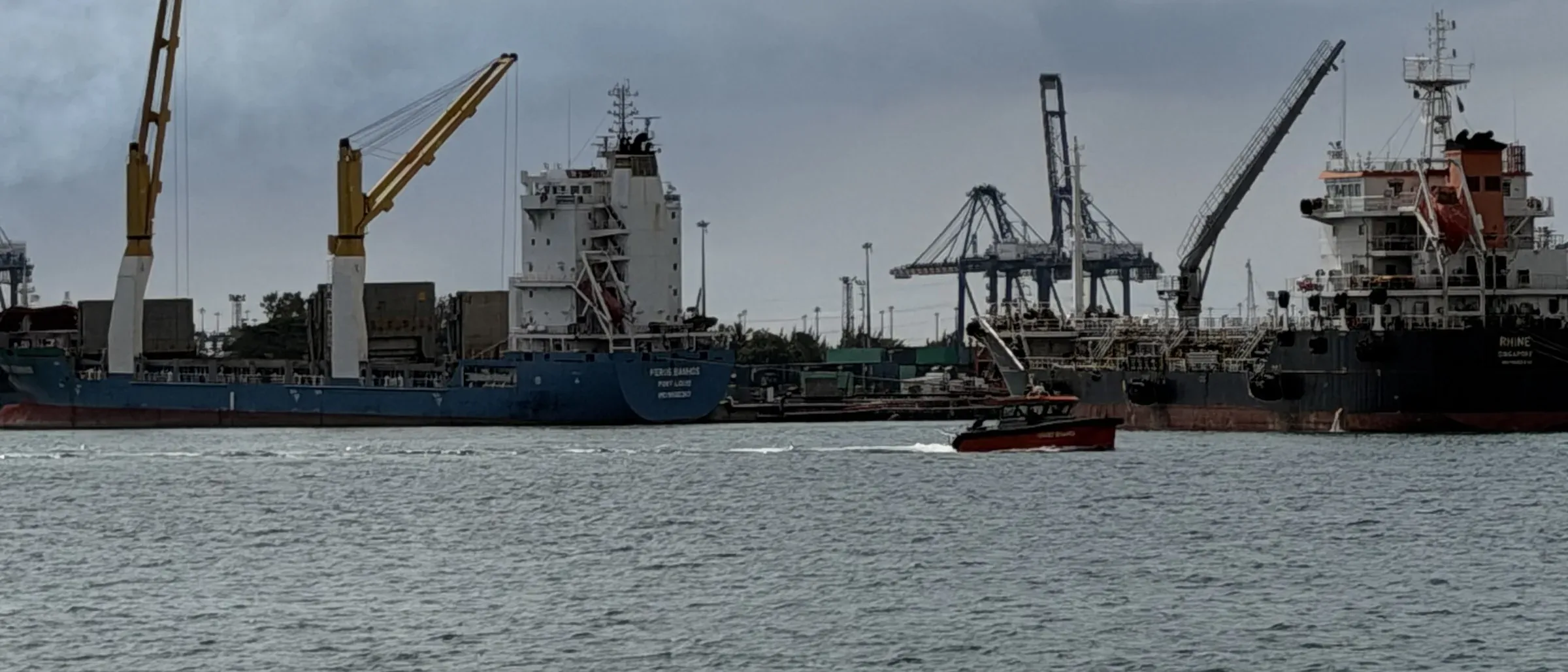
Toamasina is Madagascar's largest commercial port, classified a Port of National Interest and ISPS certified, handling around 240,000 containers a year. Every shipment leaves from here.
Traceability
Ask most vanilla suppliers where a particular carton came from and they cannot tell you. That is not evasion. Most Madagascar vanilla passes through the open bulk market, where beans from dozens of villages are combined, sorted and resold several times before export. By the time it reaches a buyer, the trail has gone cold.
We do not buy that way, which is why we can answer the question.
Where our people are
Vanilla is grown in the Sava region, in the far northeast. It ships from Toamasina on the east coast, some seven hundred kilometres to the south. Most exporters cover that distance with agents and telephone calls.
We cover it with people. We have colleagues living in the growing region itself who visit the preparation station and the harvesters in person, and Mrs Lioka, our Chief Executive, travels north from Toamasina to see the work being done.
It means that when we tell you something about how your vanilla was grown or cured, somebody we know has stood in the place where it happened.
What a lot number connects to
Every consignment carries lot numbers. They appear on the packing list, on the commercial invoice, and on the certificate of analysis for that lot. Those same numbers reference the curing and packing records held at our partners' preparation station, which record the production zone the beans came from.
So the number printed on your carton is not a label. It is a thread, and it leads somewhere.
What travels with your order
Commercial invoice, packing list, certificate of origin, certificate of analysis for the lot, and transport documents. A phytosanitary certificate is included where your country requires one.
It arrives as one document pack, not as attachments trickling in over a fortnight.
Ask us
Lot records, curing and packing records and shipping documents are kept, and any customer is welcome to see them. If you want to know where the vanilla in a particular delivery was grown, ask, and we will show you rather than tell you.
Full trade documentation is available to buyers on request.
Ethical sourcing
Vanilla is one of the most labour-intensive crops in the world. Every flower is pollinated by hand, in a window of a few hours, once a year. The pods are then picked, sweated, dried and conditioned over several months. It is a process that cannot be hurried and cannot be automated.
It is done by people who have given their working lives to it, often on land their families have worked for generations. Their judgement, built up over decades, is the reason Madagascar vanilla tastes the way it does.
It is grown in one of the poorest regions of one of the world's poorest countries, mostly by smallholders on plots of well under a hectare. What happens to the price between the plantation and the port matters enormously to them, and it is largely invisible to the buyer.
A short chain
Vanilla commonly changes hands four or five times before it leaves Madagascar. A collector buys from the grower, sells to a larger collector, who sells to a preparer, who sells to an exporter. Every one of them takes a margin, and every one of them widens the gap between what a buyer pays in Europe and what a farmer receives in the northeast.
Ours changes hands once. We buy from the preparation station ourselves, and the people doing that buying are our own rather than agents working on commission. The margin that would otherwise be taken along the way is not taken.
We are small, and we mean to stay small enough to know who is in our supply chain.
Within Malagasy law
Vanilla export from Madagascar is a regulated trade. We operate under the export licensing regime administered by the Ministry of Commerce and Consumption, and within the requirements of the Conseil National de la Vanille.
Child labour
We do not accept the use of child labour in our supply chain. We ask our suppliers to confirm their position, and we raise it with them directly rather than assuming.
What we do not claim
We hold no Fairtrade, Rainforest Alliance or Fair for Life certification, and we do not describe our vanilla as certified ethical or certified sustainable. There is a good deal of that language in this industry, some of it well earned and some of it decoration. We would rather tell you plainly what we do.
If that position changes, you will read it here first.
Full trade documentation is available to buyers on request.
Why the season matters
Availability follows the harvest. A grade that is plentiful after one crop may be scarce before the next, and curing and preparation cannot be compressed to suit a delivery date.
This is why we quote lead times as estimates rather than fixed dates, and why we would rather tell you a shipment depends on a forthcoming harvest than commit to a date the crop cannot support. Tell us your timing at enquiry stage and we will be straight with you about what is realistic.
Full commercial terms apply to all quotations and orders, including the harvest dependency of lead times.
Tell us what you need
Send the line, grade and volume you are considering and we will come back with a quotation and an honest view on timing.